DAN CAIRD

Mortgage Agent, Level 2

Sound mortgage advice and fantastic mortgage rates, simply guaranteed. Let me guide you through the mortgage process. 

Mortgage financing can be frustrating. It doesn’t have to be when you follow my simple 3-step plan.

Get started right away

The best place to start is to connect with me directly. The mortgage process is personal. My commitment is to listen to all your needs, assess your financial situation, and provide you with a clear plan forward.

Get a clear plan

Sorting through all the different mortgage lenders, rates, terms, and features can be overwhelming. Let me cut through the noise, I'll outline the best mortgage products available, with your needs in mind.

Let me handle the details

When it comes time to arrange your mortgage, I have the experience to bring it together. I'll make sure you know exactly where you stand at all times. No surprises. I've got you covered.

Download My Mortgage App

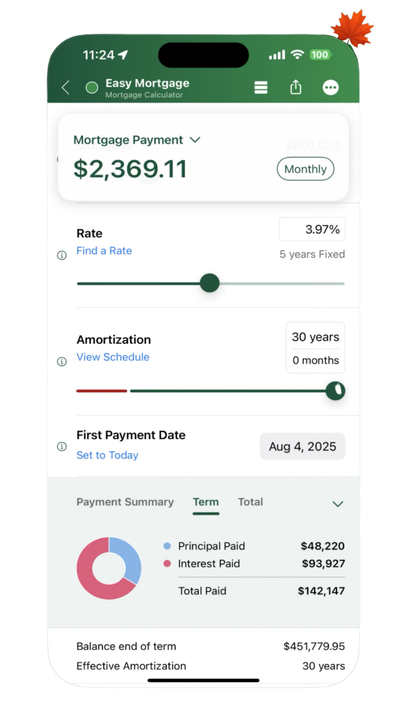
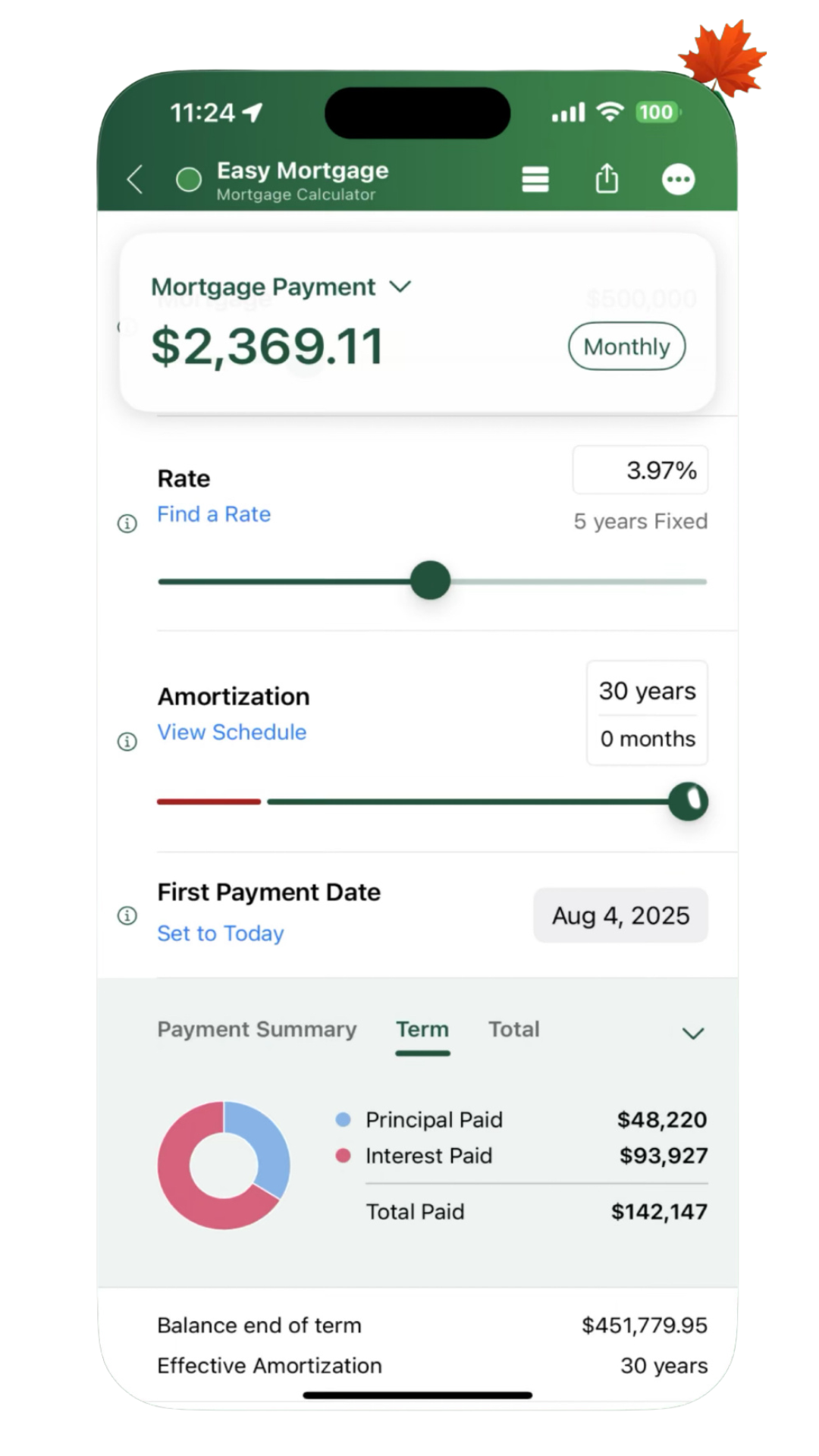
What you can do with my app
  • Calculate your total cost of owning a home
  • Estimate the minimum down payment you need
  • Calculate Land transfer taxes and the available rebates
  • Calculate the maximum loan you can borrow
  • Stress test your mortgage
  • Estimate your Closing costs
  • Compare your options side by side
  • Search for the best mortgage rates
  • Email Summary reports (PDF)
  • Use my app in English, French, Spanish, Hindi, and Chinese

Scan the QR code below or click download app

Download My Mortgage App

What you can do with my app
  • Calculate your total cost of owning a home
  • Estimate the minimum down payment you need
  • Calculate Land transfer taxes and the available rebates
  • Calculate the maximum loan you can borrow
  • Stress test your mortgage
  • Estimate your Closing costs
  • Compare your options side by side
  • Search for the best mortgage rates
  • Email Summary reports (PDF)
  • Use my app in English, French, Spanish, Hindi, and Chinese

Scan the QR code below or click download app

I'm happy to provide you with a wide range of Commercial Mortgage financing options.

Let's Get Started

Commercial financing solutions tailored to your needs, including multi family residential, construction financing, owner occupied properties, investment real estate, and business loans. 

Working with clients across the GTA and Durham Region, I have access to a wide range of mortgage products and some of the most competitive rates available in Canada. My goal is to help make the financing process clear, smooth, and as stress-free as possible.


If you ever have questions, I'm always just a phone call, text message or email away
MEMBER OF THE CANADIAN MORTGAGE BROKERS ASSOCIATION.


CMBA provides Canada’s provincial mortgage broker associations with a forum to work cooperatively, better share resources, programs, and information and coordinate engagement of provincial association members to identify trends and develop solutions to common industry and regulatory issues.


I have developed excellent relationships with lenders across

the country, when you work with me, you have choices. 

Apply Now

Mortgage Articles

By Dan Caird April 15, 2026
You’ve found the right home, your offer’s been accepted, and your financing is approved—congratulations! But before you can pick up the keys and celebrate, there’s one more important stage: the closing process. Closing is the final step in your homebuying journey, where all the paperwork, legal details, and financial transactions come together. It can feel overwhelming if you don’t know what to expect, but with the right preparation, closing can be smooth and stress-free. Here’s a step-by-step guide to help you understand the process. Step 1: Hire a Lawyer or Notary A real estate lawyer (or notary, depending on your province) handles the legal side of closing. They will: Review the purchase agreement and mortgage documents Conduct a title search to confirm the seller has the legal right to sell the property Ensure the mortgage lender is properly registered on the title Handle the transfer of funds between you, the lender, and the seller Your lawyer or notary will be your main point of contact during closing, so choose one you trust and who communicates clearly. Step 2: Finalize Your Mortgage Your lender will send the mortgage instructions directly to your lawyer or notary. At this stage: You’ll provide proof of property insurance (lenders require this before releasing funds) You’ll confirm your down payment and closing costs are available in your lawyer’s trust account The lawyer will prepare all documents for your review and signature Step 3: Pay Closing Costs Closing costs typically range from 1.5% to 4% of the purchase price. These can include: Legal fees Title insurance Land transfer tax (where applicable) Adjustments for property taxes or utilities prepaid by the seller Home inspection or appraisal fees (if not already paid) Your lawyer will provide a final statement of adjustments so you know exactly how much is due on closing day. Step 4: Sign the Paperwork A few days before closing, you’ll meet with your lawyer or notary to sign all the necessary documents, including: Mortgage agreement Title transfer Insurance confirmations Statement of adjustments Bring valid government-issued ID to this appointment. Step 5: Transfer of Funds On the day of closing: Your lender sends the mortgage funds to your lawyer Your lawyer combines these funds with your down payment and pays the seller Legal ownership of the property is transferred into your name The lender is registered on title as a secured creditor Step 6: Get the Keys! Once the paperwork is filed and the funds have cleared, your lawyer will confirm that the transaction is complete. You’ll then get the keys to your new home—officially making it yours. The Bottom Line The closing process is a series of important steps, but with the right team in place, it doesn’t have to be stressful. By working closely with your mortgage professional and lawyer, you’ll have guidance every step of the way—from signing the documents to turning the key in the front door. If you’d like help preparing for the closing process—or want a clear breakdown of your own closing costs— connect with us today.
By Dan Caird April 10, 2026
Your credit score is one of the most important numbers in your financial life — especially when it comes to getting a mortgage. But for most Canadians, how that number actually gets calculated remains a bit of a mystery.
By Dan Caird April 8, 2026
Owning a vacation home or an investment rental property is a dream for many Canadians. Whether it’s a cottage on the lake for family getaways or a rental unit to generate extra income, real estate can be both a lifestyle choice and a smart financial move. But before you dive in, it’s important to know what lenders look for when financing these types of properties. 1. Down Payment Requirements The biggest difference between buying a primary residence and a vacation or rental property is the down payment. Vacation property (owner-occupied, seasonal, or secondary home): Typically requires at least 5–10% down, depending on the lender and whether the property is winterized and accessible year-round. Rental property: Usually requires a minimum of 20% down. This is because rental income can fluctuate, and lenders want extra security before approving financing. 2. Property Type & Location Not all properties qualify for traditional mortgage financing. Lenders consider: Accessibility : Is the property accessible year-round (roads maintained, utilities available)? Condition : Seasonal or non-winterized cottages may not meet standard lending criteria. Zoning & Use : If it’s a rental, lenders want to ensure it complies with municipal bylaws and zoning regulations. Properties that fall outside these norms may require financing through alternative lenders, often with higher rates but more flexibility. 3. Rental Income Considerations If you’re buying a property with the intent to rent it out, lenders may factor the rental income into your mortgage application. Long-term rentals : Lenders typically accept 50–80% of the expected rental income when calculating your debt-service ratios. Short-term rentals (Airbnb, VRBO, etc.) : Many traditional lenders are cautious about using projected income from short-term rentals. Alternative lenders may be more flexible, depending on the property’s location and your financial profile. 4. Debt-Service Ratios Lenders use your Gross Debt Service (GDS) and Total Debt Service (TDS) ratios to determine if you can handle the mortgage payments alongside your other obligations. With investment or vacation properties, lenders may apply stricter guidelines, especially if your primary residence already carries a large mortgage. 5. Credit & Financial Stability Your credit score, employment history, and overall financial health still matter. Since vacation and rental properties are considered higher risk, lenders want reassurance that you can handle the additional debt—even if rental income fluctuates or the property sits vacant. 6. Insurance Requirements Rental properties often require specialized landlord insurance, and vacation homes may need coverage tailored to seasonal or secondary use. Lenders will want proof of adequate insurance before releasing mortgage funds. The Bottom Line Buying a vacation property or rental can be exciting, but financing these purchases comes with extra rules and considerations. From higher down payments to stricter property requirements, lenders want to be confident that you can handle the responsibility. If you’re considering a second property, the best step is to work with a mortgage professional who can compare lender requirements, outline your options, and find the financing that works best for you. Thinking about making your dream of a vacation or rental property a reality? Connect with us today.
By Dan Caird April 1, 2026
Owning a home feels great—carrying a large mortgage, not so much. The good news? With the right strategies, you can shorten your amortization, save thousands in interest, and become mortgage-free sooner than you think. Here are four proven ways to make it happen: 1. Switch to Accelerated Payments One of the simplest ways to reduce your mortgage faster is by moving from monthly payments to accelerated bi-weekly payments . Instead of 12 monthly payments a year, you’ll make 26 half-payments. That works out to the equivalent of one extra monthly payment each year, shaving years off your mortgage—often without you noticing much difference in your budget. 2. Increase Your Regular Payments Most mortgages allow you to boost your regular payment by 10–25%. Some even let you double up payments occasionally. Every extra dollar goes directly toward your principal, which means less interest and faster progress toward paying off your balance. 3. Make Lump-Sum Payments Depending on your lender, you may be able to make lump-sum payments of 10–25% of your original mortgage balance each year. This option is ideal if you receive a bonus, inheritance, or other windfall. Applying a lump sum directly to your principal immediately reduces the interest charged for the rest of your term. 4. Review Your Mortgage Annually It’s easy to put your mortgage on auto-pilot, but a yearly review keeps you in control. By sitting down with an independent mortgage professional, you can check if refinancing, restructuring, or adjusting terms could save you money. A quick annual review helps ensure your mortgage is always working for you—not against you. The Bottom Line Paying off your mortgage early doesn’t require a massive lifestyle change—it’s about making smart, consistent choices. Whether it’s accelerated payments, lump sums, or regular reviews, every step you take helps reduce your debt faster. If you’d like to explore strategies tailored to your situation—or want a free annual mortgage review—let’s connect. I’d be happy to help you find the fastest path to mortgage freedom.
By Dan Caird March 25, 2026
For most Canadians, buying a home isn’t possible without a mortgage. And while getting a mortgage may seem straightforward—borrow money, buy a home, pay it back—it’s the details that make the difference. Understanding how mortgages work (and what to watch out for) is key to keeping your borrowing costs as low as possible. The Basics: How a Mortgage Works A mortgage is a loan secured against your property. You agree to pay it back over an amortization period (often 25 years), divided into shorter terms (ranging from 6 months to 10 years). Each term comes with its own interest rate and rules. While the interest rate is important, it’s not the only thing that determines the true cost of your mortgage. Features, penalties, and flexibility all play a role—and sometimes a slightly higher rate can save you thousands in the long run. Key Questions to Ask Before Choosing a Mortgage How long will you stay in the property? Your timeframe helps determine the right term length and product. Do you need flexibility to move? If a work transfer or lifestyle change is possible, portability may be important. What are the penalties for breaking the mortgage early? This is one of the biggest factors in the real cost of borrowing. A low rate won’t save you if breaking costs you tens of thousands. How are penalties calculated? Some lenders use more borrower-friendly formulas than others. It’s not easy to calculate yourself—get professional help. Can you make extra payments? Prepayment privileges allow you to pay off your mortgage faster, potentially saving years of interest. How is the mortgage registered on title? Some registrations (like collateral charges) can limit your ability to switch lenders at renewal without extra costs. Which type of mortgage fits best? Fixed, variable, HELOCs, or even reverse mortgages each have their place depending on your financial and life situation. What’s your down payment? A larger down payment could reduce or eliminate mortgage insurance premiums, saving thousands upfront. Why the Lowest Rate Isn’t Always the Best Choice It’s tempting to chase the lowest rate, but mortgages with rock-bottom pricing often come with restrictive terms. For example, saving 0.10% on your rate may put a few extra dollars in your pocket each month, but if the mortgage has harsh penalties, you could end up paying thousands more if you break it early. The goal isn’t just the lowest rate—it’s the lowest overall cost of borrowing . That’s why it’s so important to look beyond the headline number and consider the whole picture. The Bottom Line Mortgage financing in Canada is about more than rate shopping. It’s about aligning your mortgage with your financial goals, lifestyle, and future plans. The best way to do that is to work with an independent mortgage professional who can walk you through the fine print and help you secure the product that truly keeps your costs low. If you’d like to explore your options—or review your current mortgage to see if it’s really working in your favour—let’s connect. I’d be happy to help.
By Dan Caird March 18, 2026
The Bank of Canada announced today that it is holding its target for the overnight rate at 2.25%, with the Bank Rate at 2.5% and the deposit rate at 2.20%. For anyone watching the mortgage market — whether you're renewing, purchasing, or simply keeping an eye on borrowing costs — here's a breakdown of what was announced and what it may mean for you.
Read More

Check out my TikTok